House Rejects Limits on Trump's War Powers as Iran Conflict Escalates
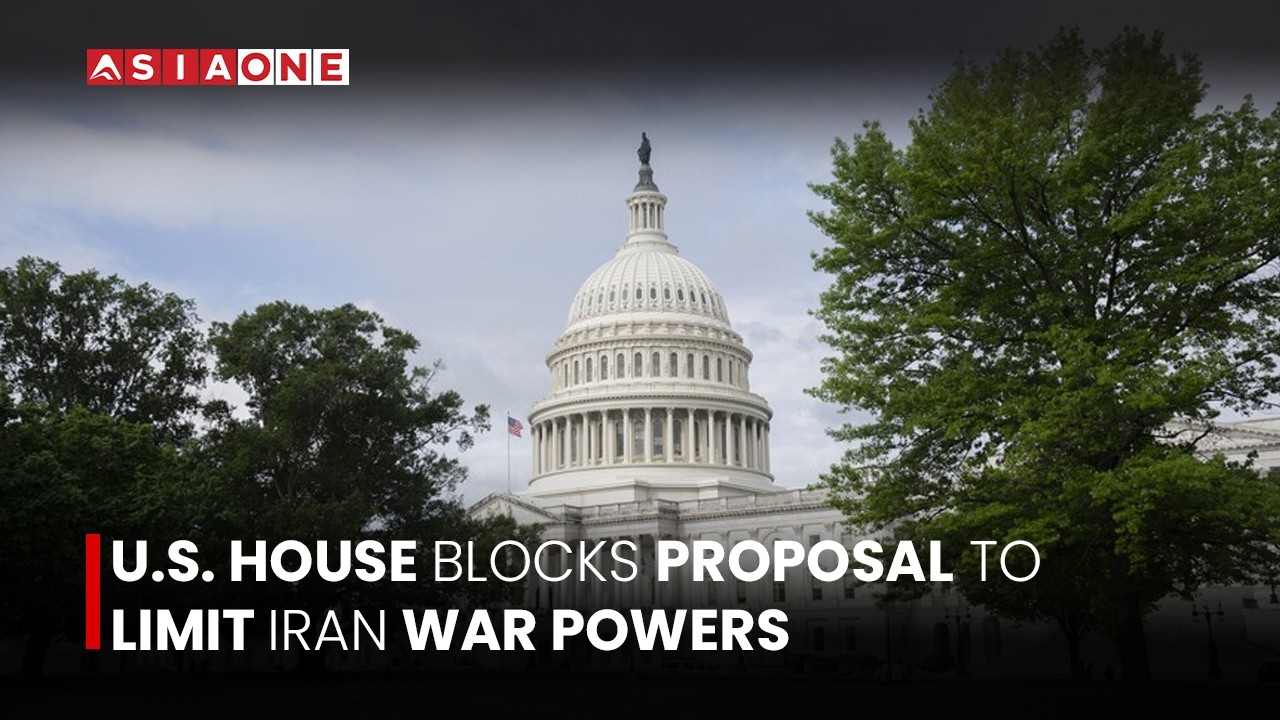
The **House of Representatives** has narrowly rejected a proposal to limit **President Trump**'s war powers in relation to the ongoing conflict with **Iran**. T
Summary
The **House of Representatives** has narrowly rejected a proposal to limit **President Trump**'s war powers in relation to the ongoing conflict with **Iran**. The vote, which took place on April 16, 2026, saw **Republican leaders** manage to keep defections to a minimum, indicating that the party is not yet ready to publicly break with the **White House** on the war effort. This development comes as the conflict with Iran continues to escalate, with **US military** operations ongoing in the region. The vote has significant implications for the future of the conflict, with many lawmakers expressing concerns about the potential for further escalation. For more information on the conflict, see [[iran-conflict|Iran Conflict]] and [[us-military|US Military]]. The role of **Congress** in regulating war powers is also crucial, as discussed in [[war-powers-act|War Powers Act]].
Key Takeaways
- The House of Representatives rejected a proposal to limit President Trump's war powers in relation to the conflict with Iran
- The vote was narrowly decided, with Republican leaders managing to keep defections to a minimum
- The rejection of the proposal has significant implications for the future of the conflict
- The conflict has already had significant humanitarian and economic costs
- Further escalation could have devastating consequences for the region and the world
Balanced Perspective
The vote on the proposal to limit **President Trump**'s war powers was a closely contested one, with both sides presenting strong arguments. On the one hand, supporters of the proposal argued that it was necessary to ensure that the **President** does not have too much power to unilaterally declare war. On the other hand, opponents of the proposal argued that it would undermine the **President**'s ability to respond quickly and effectively to emerging threats. The vote has significant implications for the future of the conflict, with many lawmakers expressing concerns about the potential for further escalation. For more information on the implications, see [[us-foreign-policy|US Foreign Policy]]. The role of **Congress** in regulating war powers is also crucial, as discussed in [[congress-war-powers|Congress War Powers]].
Optimistic View
The rejection of the proposal to limit **President Trump**'s war powers is a significant victory for the **Trump administration**, which has been facing growing criticism over its handling of the conflict. This development suggests that the administration will be able to continue its current approach to the conflict, which has included a combination of diplomatic and military efforts. The administration's approach has been supported by some lawmakers, such as **Senator Lindsey Graham**, who have argued that it is necessary to take a strong stance against **Iran**. For more information on the administration's approach, see [[trump-administration|Trump Administration]]. However, others have expressed concerns about the potential for the conflict to escalate into a full-scale war, as discussed in [[iran-war|Iran War]].
Critical View
The rejection of the proposal to limit **President Trump**'s war powers is a concerning development, as it suggests that the **Trump administration** will be able to continue its current approach to the conflict without significant oversight or constraint. This approach has been criticized by many lawmakers and experts, who argue that it is too aggressive and likely to escalate the conflict into a full-scale war. The conflict has already had significant humanitarian and economic costs, and further escalation could have devastating consequences for the region and the world. For more information on the humanitarian costs, see [[humanitarian-crisis|Humanitarian Crisis]]. The impact of the conflict on the **global economy** is also a significant concern, as discussed in [[global-economy|Global Economy]].
Source
Originally reported by Politico